Museum dedicated to UNESCO-recognized Konjic woodcarving unveils new exhibition exploring heritage, design, innovation, and community.
Konjic, Bosnia and Herzegovina, June 29, 2026
The Woodcarving Museum in Konjic, Bosnia and Herzegovina, will reopen on June 29, 2026, unveiling a substantially renewed exhibition dedicated to one of the world’s most remarkable examples of living craft heritage.
Established by the family behind Zanat, the museum tells the story of how a centuries-old local woodcarving tradition evolved into a UNESCO-recognized cultural practice, an internationally acclaimed contemporary design platform, and an award-winning museum. Today, it stands as a unique example of how private initiative, entrepreneurship, design, and culture can work together to safeguard living heritage and create new opportunities for communities in the twenty-first century.
The museum preserves and interprets the story of Konjic woodcarving, a tradition inscribed on UNESCO’s Representative List of the Intangible Cultural Heritage of Humanity in 2017.
Established in 2019 following the UNESCO inscription, the museum has become one of Bosnia and Herzegovina’s most distinctive cultural attractions and an internationally recognized example of how intangible cultural heritage can contribute to cultural, social, and economic development. The Woodcarving Museum is a unique museum institution dedicated to a UNESCO-recognized woodcarving tradition and to the story of its transformation from a local craft into an internationally recognized contemporary design practice.
The museum’s innovative approach has received significant international recognition. In 2022, it received the Živa Award for Best Slavic Museum and, in the same year, won the prestigious Luigi Micheletti Award presented by the European Museum Academy. In its citation, the jury praised the museum as an outstanding example of the preservation and enhancement of intangible cultural heritage, a unique model for building bridges between traditional craftsmanship and contemporary design, and a role model for other heritage sites around the world. The judges further highlighted the museum’s exceptional ability to communicate UNESCO-recognized living heritage in the twenty-first century.
The renewed exhibition offers visitors a richer and more comprehensive understanding of Konjic woodcarving, the families and master craftsmen who have carried the tradition across generations, and its evolution into a contemporary creative practice. Among the new additions is the “Ideas Factory,” a new exhibition space dedicated to the process of product development at Zanat. Through sketches, prototypes, tools, and finished works, visitors can follow the journey from an initial idea to a completed object and gain insight into how traditional craftsmanship continues to evolve through collaboration with leading contemporary designers.
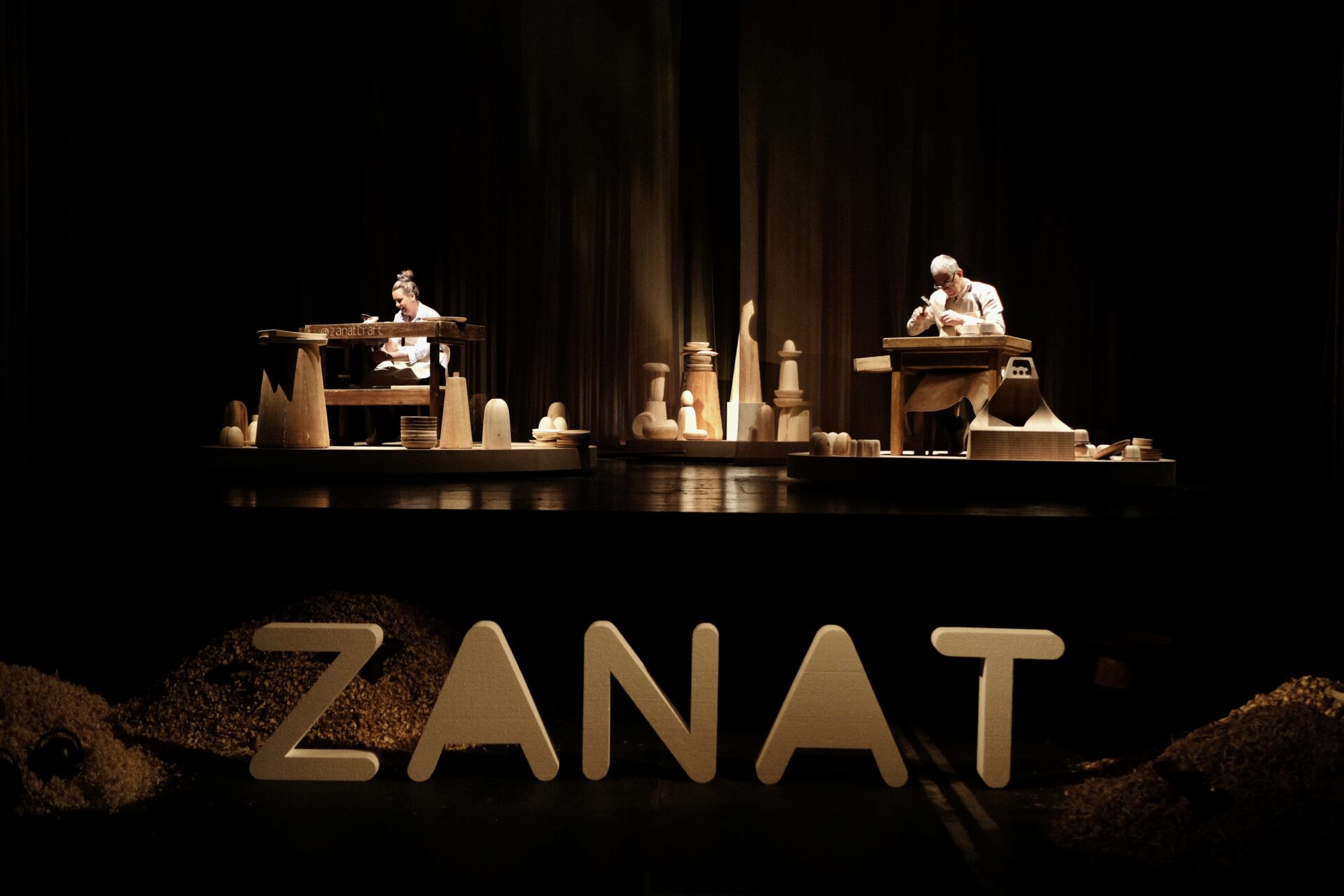
The renewed museum also includes a demonstration woodcarving workshop where visitors can observe master woodcarvers at work and experience the craft firsthand. The workshop will host introductory woodcarving courses, live demonstrations, and educational activities designed to bring new generations closer to one of Europe’s most distinctive living craft traditions.
The museum now also includes dedicated spaces celebrating the international designers who have collaborated with Zanat over the past decade (Yves Behar, Ilse Crawford, Monica Forster, Naoto Fukasawa, Sebastian Herkner, Harri Koskinen, Michele De Lucchi, Roberto Palomba and Ludovica Serafini, Jean-Marie Massaud, Jasna Mujkic, Patrick Norguet, Salih Teskeređić, and Wingardhs architects) helping connect a deeply rooted local tradition with the global world of contemporary design.
A special memorial section is dedicated to Besim Nikšić (1953–2024), entrepreneur, master carpenter and woodcarver, one of key figures behind the preservation, revitalization, and international recognition of Konjic woodcarving. His vision and lifelong commitment played a decisive role in ensuring the survival and renewal of the craft for future generations.
The original museum concept was conceived by Orhan Nikšić, Zanat’s CEO and co-founder. The architecture of the original exhibition was designed by Emir Salkić of Normal Arhitektura, the graphic design by Enes Huseinčehajić, and the exhibition texts by Ahmed Burić. The 2026 exhibition redesign was developed by the Sarajevo-based studio Mecolada. Production of the renewed exhibition, including the museum’s striking parametric wooden interior structure, was carried out by Zanat’s production team led by architect and Zanat co-founder Adem Nikšić.
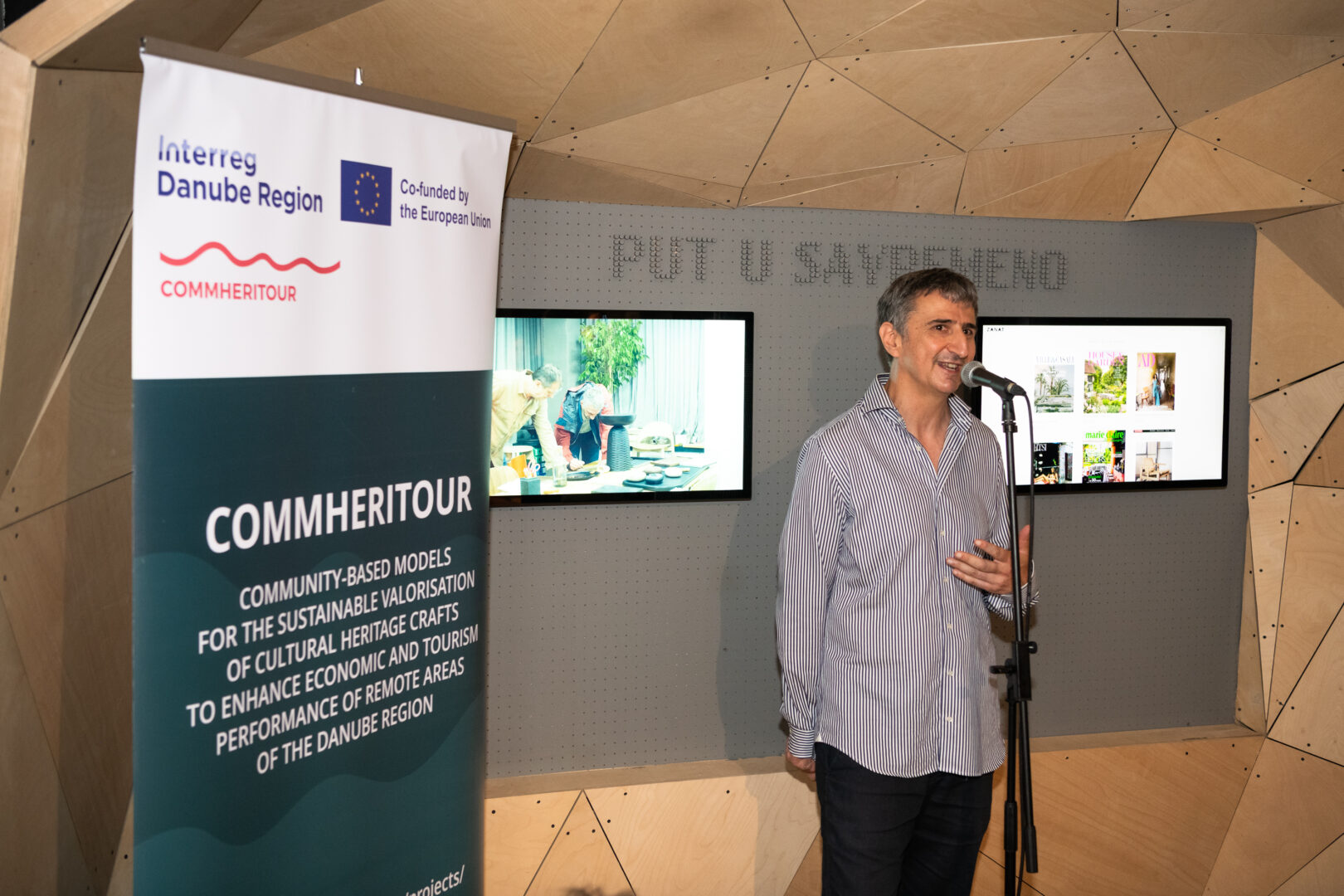
The museum redesign was supported through COMHERITOUR, an Interreg Danube Region Programme project supported by the European Union and implemented in Bosnia and Herzegovina by the Herzegovina-Neretva Canton Tourist Board and Rukotvorine d.o.o. (Zanat) of Konjic. The implementation of the museum renewal project and the production of the new exhibition were fully financed by Zanat.
Today, the Woodcarving Museum is not only a place that preserves history. It demonstrates how heritage can remain alive, continue to evolve, and create new value through education, creativity, design, and international collaboration.
The reopening ceremony will take place on June 29, 2026, bringing together representatives of cultural institutions, museums, international organizations, designers, craftspeople, partners, media, and friends of the museum.